
Fasnacht is the most head-scratching but exciting Swiss custom we have experienced. The best way to describe it is Swiss Mardi Gras in that the city turns into one massive street parade/party for 72 hours, and yet, there are many differences in Basel’s Carnival:
- Chienbäse: This actually isn’t part of the famous Basel Fasnacht, but it takes place in a small suburb (about a 9 -minute train outside of the city) and can best be described as a fire parade. This hour-long event is a procession of people (men, women, AND children) carrying flaming bundles of sticks, nay timbers, or pulling massive, blazing wagons. There were lots of fire marshals and all the participants were wearing flame-retardant clothing, but they were still parading fire through narrow streets. Insurance companies would never allow such an event in the states. Ever. Most crazy of all was watching the fire wagons come through the archway of a wooden clock tower. The fire department had to hose down the archway before and after to prevent it from burning down. The last wagon’s fire was so large that it surged up the sides of the tower and forced all of the on-lookers to duck for cover as it passed. By the end of the event, we were covered in ash and felt like we had smoked 10 packs of cigarettes. Honestly, words don’t do this event justice, so here are a few videos to better explain:
- Morgenstreich: Fasnacht officially begins at 4 am on the Monday after Ash Wednesday with Morgenstreich. The entire city goes dark (you actually get fined if you are caught with lights on) and cliques parade through the city with “lanterns,” piccolos, and drums. Cliques can range in size from 5 to 40 people and are basically groups consisting of pipers, drummers, and a vanguard. Each clique selects a theme every year and designs their lantern and costumes to match. This year, there were quite a few Donald Trump groups (all of which were negative), a few Brexit groups, and a hell of a lot of “I have no idea what those are supposed to be.” We are trying to fit in locally, but understanding Swiss German/Basel humor has yet to be tackled …We are very lucky in that the parade route comes right by our windows, so we invited a few friends up to watch from the comfort and warmth of our apartment. Sarah welcomed the opportunity to play hostess and made quiche, french toast, mimosas, and bloody mary’s to help fuel our group through the early hours of the morning. Around 7 am, the cliques started to disperse in order to rest up before the day geared up again, and we too decided to nap while the streets were relatively quiet. Here is one video from the morning.
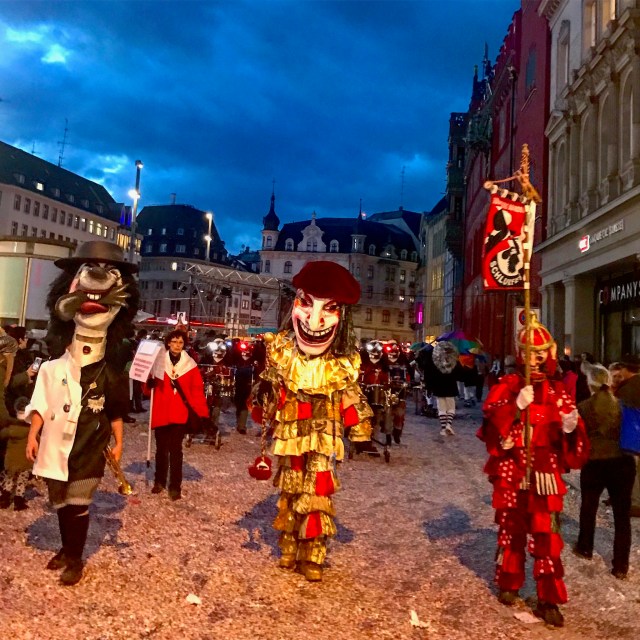
- Parades and Waggis: Starting around 1 pm every day (Monday, Tuesday, Wednesday), there is a MASSIVE parade around Altstadt. All of the cliques march in the streets and are accompanied by parade floats featuring Waggis, who are basically clowns /jokers. Sometimes they give (mostly throw) you candy; seasonal vegetables/fruits such as onions, carrots, and oranges; toys; and if you’re lucky, airplane bottles. More often, though, they shower you in confetti. There are also Waggis who roam the streets – they are usually teenagers who shove confetti down your shirts, pants, jackets, etc. On the first day of Fasnacht, we tried to avoid the Waggis’ confetti bombs, but by day two, we just realized it’s part of the fun. To avoid them is to miss out on the excitement and tradition. Fun fact, Cliques/Waggis are only allowed to throw confetti of one color. If you have thrown confetti of multiple colors, this means that you picked it up from the ground and you have thus violated everything the Swiss value (cleanliness and paying for things). The parades go until the wee hours of the morning. Never was there a time during the 72 hours that we looked out our window and DIDN’T see parades. This video was taken around midnight – you can see that the streets are packed.


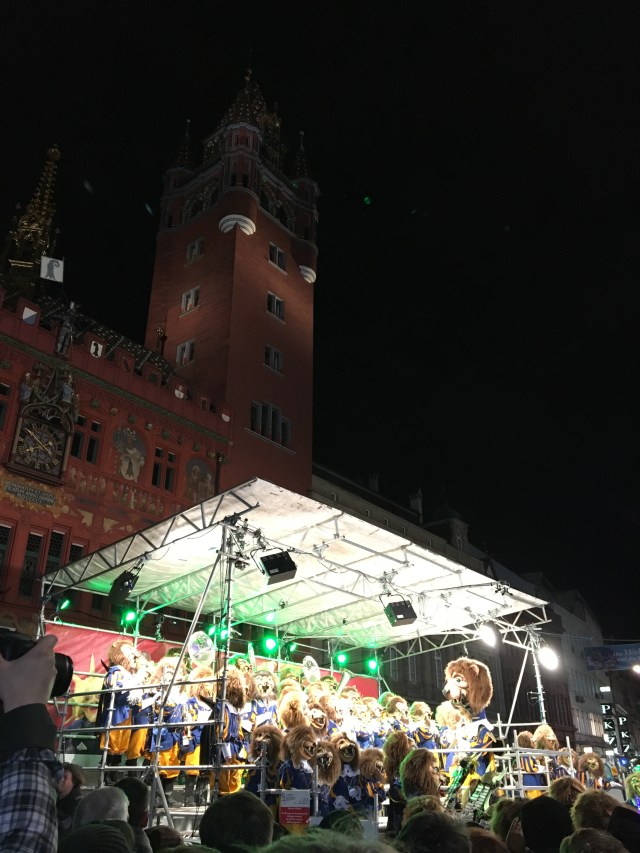
4. Guggenbands: In our opinion, Gugegnbands are the best part of Fasnacht. Neither of us is particularly gifted in music, but we both certainly enjoy the musical skills of others. Sure, piccolos and drums of the traditional cliques are neat, but three days of the same two songs over and over gets old rather quickly. Luckily, Guggenbands (the non-traditional brass groups) often play modern music (AWOLNATION, Nathaniel Rateliff, Neil Diamond, etc.) to rejuvenate the crowds. On Tuesday, the city actually set up two stages and arranged for the Guggenbands to perform for a few minutes at each location. Unfortunately, we weren’t able to see all of the groups, but we LOVED dancing and singing along.
We had an absolute blast watching this typically sleepy and orderly town come alive with celebrations, but after 72 hours of constant noise and partying, we are exhausted to say to least.
 SASgoesSwiss